


SARUYA ARTIST IN RESIDENCECONCEPT
SARUYA ARTIST IN RESIDENCE (SARUYA AIR) is an artist residency located in Fujiyoshida, Japan, a city known for its traditional textile industry and the diverse ecosystems nurtured by the forests of Mt. Fuji. We offer a space where artists and creators inspired by this unique environment can focus on their work and deepen their ideas.
Artists can stay for a minimum of one month and up to three months. Since 2017, over 200 artists from around the world have taken part in the program, making SARUYA AIR a place where culture and art are shared across borders.
From textiles to film, dance, and design, we welcome diverse disciplines inspired by the forests and town. Residents set their own schedules and work independently. We also provide opportunities for local engagement and presentations of their work, ensuring that their time here becomes a source of discovery and inspiration.
We aim to make life here—initially an “extraordinary” experience for the artist—feel like a natural extension of their daily life. By introducing them to the local industries, the ecosystems of Mt. Fuji, and the people of the community, we hope SARUYA AIR will become a place they can return to as one of their bases for future creative work.
We look forward to receiving your applications!
SARUYA ARTIST IN RESIDENCE


The Creation Spaces
We provide a studio space, inside the main building where the rooms and common areas are.
We have woodworking tools as well as digital printers for the artists to use.


The Rooms
SARUYA Artist in Residence offers 4 rooms on the second floor.
Those rooms are traditional tatami rooms with futons and shôji (paper doors).

The Details
- Duration of residency: 1 month to 3 months
- Studio space: shared studio.
- Accommodation: 4 rooms in a shared building
- Food, Transportation, Art Supplies not included
The residency fee is based on several factors. The room you choose, the length of your stay as well as the number of people in your room.
The base fee is ¥132,300~ per month, please contact us for details about you particular needs.

About This Region
Fujiyoshida
Fujiyoshida is a city in Yamanashi Prefecture, known as the only place in the prefecture with an official climbing route to Mount Fuji. The city has thrived through a combination of tourism and the textile industry, which developed by utilizing abundant spring water.
The Yoshida Trail, which starts at the foot of the mountain, is the only route that has been continuously maintained in its original form, preserving the path used historically by pilgrims and climbers.
With the rise of Mt. Fuji tourism, the area experienced a boom, leading to the growth of commerce catering to visitors. Both Kamiyoshida and Shimoyoshida developed into active commercial zones.
In the Edo period, the local silk weaving industry gained prominence, becoming a core part of the regional economy. At the same time, the government issued sumptuary laws banning luxurious clothing. This led to a trend of using decorative inner linings that weren’t visible from the outside, which in turn encouraged the development of refined weaving techniques and contributed to the flourishing of the textile trade.
Thanks to the blessings of Mt. Fuji in the form of abundant spring water, waterways played a vital role in the formation of the town. Many households combined textile work with agriculture. Hydroponic farming using spring water became common, leading to the establishment of the local food culture, such as “Yoshida no Udon.”
Mount Fuji
Mount Fuji, shaped over thousands of years by volcanic activity, has a striking landscape that symbolizes the boundary between life and death.
In areas where lava flows occurred, vegetation is sparse, while the untouched plateaus are covered in broadleaf forests. This contrast is particularly evident in places like the Aokigahara Forest and the edge of the Kenmarubi Lava Flow. Caves formed by lava flows, lava tree molds known as lava tree shapes, the tenchi no sakai (boundary of heaven and earth) at the tree line, and the Ochudo trail circling the mountain—these natural formations have long fascinated people and given rise to deep meanings and spiritual beliefs.

Textile factory of Fujiyoshida
Tenjin Factory
With over 70 years of accumulated expertise, Tenjin Factory produces linen fabrics designed to blend seamlessly into everyday Japanese life.
Linen, made from the stalks of flax plants and not using flowers or leaves, is known for its minimal impact on ecosystems and low risk of soil pollution. By focusing on linen, Tenjin Factory aims to create environmentally conscious textiles that harmonize with daily living.
Materials: Cotton, Linen
Watanabe Textile
Led by the third-generation owner, Tatsuyasu Watanabe—whose background includes architecture, photography, and art—Watanabe Textile explores new possibilities in textiles using natural materials. From design to weaving, he handles every process himself.
Using a dobby loom suited for weaving simple structures, he primarily works with cupro (a regenerated cellulose fiber) while blending in various natural materials to create his own distinctive fabrics.
Materials: Japanese paper, Alpaca, Silk, Cotton, Linen, Cashmere, Wool, Rayon, Nylon, Polyester, Cupro
Funakubo Textile
Founded in 1924, Funakubo Textile has been weaving a wide variety of fabrics and patterns, particularly specializing in umbrella fabrics.
The company is known for its mastery of Hogushi-ori, a technique in which warp threads are dyed and temporarily woven with placeholder weft threads. These temporary threads are then removed before the final weaving, resulting in patterns with a blurred, soft, and deeply textured appearance.
Materials: Silk, Cotton, Linen, Polyester
Maeda Gen Shoten
Established in 1921, Maeda Gen Shoten has over 100 years of history. In the 1990s, the company discovered organic cotton and was inspired by its quality and potential. Since then, they have shifted to producing fabrics made from organic cotton, continuing their tradition of high-level craftsmanship while promoting sustainable materials.
Material: Organic Cotton
Many other weaving mills in Fujiyoshida continue to create high-quality textiles with a deep respect for tradition and innovation.
The Residency Location
3-28-8 Shimoyoshida, Fujiyoshida
Yamanashi 403-0004
View on Google Maps
From Tokyo Haneda : Direct bus from the airport to Mt Fuji station
From Tokyo Narita : Narita Express to Shinjuku
Then Bus to Mt Fuji Station
Osaka to Fujiyoshida : highway bus or train
Mishima to Fujiyoshida : highway bus (Mishima is a stop on the Shinkansen line.)
The Residency Story
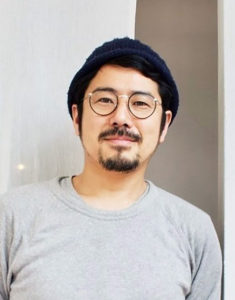
Our Founder
Tsuyoshi Yagi majored in oil painting for four years in Nagoya, then went on to study art for another four years at an art school in France. After graduating, he returned to Japan with the aim of creating a bridge between Japanese culture and art.
After working at a design firm in Tokyo, he renovated a vacant house into a hostel. Making use of local woodworking techniques and materials, he created a space where every detail reflects his design sensibility, blending contemporary culture with traditional Japanese culture—particularly the atmosphere of Fujiyoshida.
How the artist in residence started
One of the projects undertaken by Tsuyoshi Yagi is the SARUYA ARTIST IN RESIDENCE.
It was established to create opportunities for the people of Fujiyoshida to feel closer to art and experience it firsthand.
At the monthly Open Studio and Open Atelier events, local residents are invited to view artworks and engage with the artists.
Since 2020, together with its partner organization, it has been working to broaden the scope of collaboration between Japanese crafts and the arts.
Our Sponsors
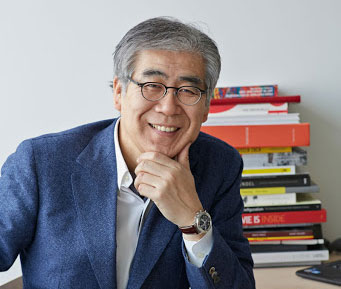
Fumio Nanjo
SARUYA is proud to introduce someone who is a constant source of inspiration, Mr Fumio Nanjo.He is the former director of 15 years of the Mori Art Museum in Tokyo and now its Senior Advisor. And he also runs a company that manages several museums in Japan. Mr Nanjo became a sponsor in 2020 in a personal capacity.

Loftwork
Loftwork Inc. is a creative agency which designs websites, contents, services, communication and spaces. They manage the digital craft cafe “FabCafe” with expansion overseas, creative lounge “MTRL (Material)” which comes face to face with raw materials. They also run the online community awrd.com, in addition to the platform “OpenCU” which accelerates creative learning.
Contact us
Notice*
Our Open call for 2025 has been closed.
We will reopen our admission around Jun 2025.
Please send us a message if you have any questions regarding our residency.
To submit an application, please visit our application page.